Tuesday, 21 January 2014

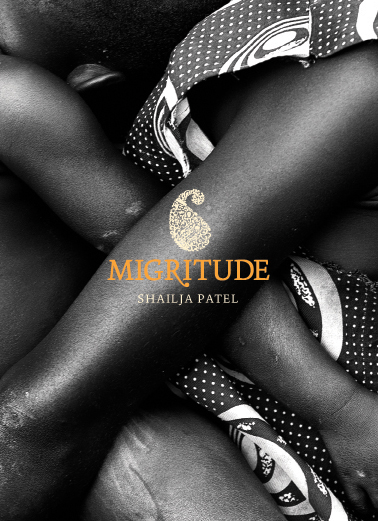
Migritude by Shailja Patel


Image Link

Migritude is an autobiography as well as a poetry, spoken-word theater, and text-based performance for stage, as the author defined, literature written by Shailja Patel in 2010. Patel is a third generation of Indian who was born in Kenya, and she referred herself as an East African Asian. The title itself, Migritude, does not exist in any English dictionary because Migritude is originally an acronym from three different words: migration, attitude, and negritude. These three words represent cultural terms, which give the readers hints about major themes that are discussed in the book.

The book consists of four major chapters. Both of the first and second chapter are divided into two big parts; Part I is when the author lived in Nairobi, Kenya (1972-1989) and Part II is when she lived in UK and the U.S. (1990-2004). The third chapter is a collection of poems, and the last chapter consists of timeline of remarkable events and two interviews with the author. 
 
Actually, Migritude itself was a one-woman show that had been performed in many countries before the book was published. Patel often was very brave to disagree with one’s point of view if it is not unreasonable for her. Like, when she dated a man who told that she had a terrible childhood, she was very shocked. Also, she felt bad when she was forbidden to be friends with her Christian friend, Nina, and when she got a pity look because she cut a doughnut into three pieces. All of these things happened made her very critical and aware of her position; that being an immigrant was not as easy as it seemed. “Yes, I’m exploding. Yes, I’m outta control” (p. 36). Despite her beautiful and metaphorical words, there is an anger and frustration lying underneath the surface. However, Patel neatly covered them and transformed them into a good piece of writing.

 There are also some comments from her regarding the theater itself. Besides a writer, Patel is known as a playwright. She said, “Theater is relationship” (p. 85) and “Performing is so much easier than writing because it’s collaborative” (p. 86). By seeing this, we can see that Patel could transform the issues that formerly might be taboo to be discussed into a performance that could be enjoyed by everyone, without removing the messages she wanted to deliver. There is an interesting point contained the second chapter. Patel admitted, “I brought Migritude. A tapestry of poetry, history, politics, packed into a suitcase, embedded in my body, rolled out into theatre. An accounting of Empire enacted on the bodies of women” (p. 96). Patel as if said that she was the living history itself, and she lived with the history. 

 There is one outstanding poem titled Eater of Death. This poem tells a story of Bibi Sardar who lost her entire family during the U.S. attack in October 2001. Even though the author did not explicitly mentioned the attack was ‘war on terror’, the readers can draw conclusion from when and how it happened. “Their names will not be remembered, they are not Amrikan” (p. 112). Unlike the 9/11 victims who were built a national memorial, they were just unknown victims from foreign country. Patel, even though she is not a Muslim, tried to see the tragedy from the perspective of the minority to show that they were actually as suffering as the Americans. Overall, the third chapter has similar themes with the previous two chapters. The difference is, this part is full of poems without any narration included. The last poem, The Making, as if concludes every issues Patel had discussed before: “Make it / to find out / what your own hands are good for” (p. 122). She wanted to say that, it does not matter who you are, the most important thing is you actually can do anything to make the best out of you.

Nonetheless, every piece of work must have some weaknesses and strengths. Now, I would like to analyze some weaknesses and strengths found in this book. To some readers, the poetic and metaphorical words might be quite disturbing and hard to understand. The readers should read more than once in order to understand the literal meaning. Also, some of the readers may complain about the language and the form of writing that the author chose. Sometimes Patel used narrations, poems, performance scripts, or even interviews. It creates confusion for the readers because the form of writing is not consistent. Thus, for some people who like to read novels, it can be disturbing because they do not familiar with other types of writing rather than narration. Similarly, people who enjoy poems might find it disturbing because they do not expect any narration contained. I also found that Migritude contains histories and serious issues, which to some people are unbearable because it is sometimes related to a particular political interest. However, it does not apply to Patel’s writing. What I trying to say is, the issues she was discussing are various, for example, the history of Kenya and Uganda, raping, Indian culture, war, racial profiling, 9/11, and social injustice. She mixed them up into one book. It is kind of overwhelming, and the metaphorical words can be shortcomings because some readers might not get the key point or the main idea she was talking about. Also, I need to say that to some readers who are not really familiar to read such a form of language might find hardship and need to read multiple times in order to entirely understand. 

Despite the weaknesses, Migritude has successfully formulated the “boring” issues into an enjoyable piece of writing. The readers might not realize that they are actually reading a history book because it is delivered beautifully. To me, it is one of the strengths and it what makes the book interesting. There are not many other authors who have been brave enough to be out of conventional way of writing. In addition, Patel’s choice of words is not also full of flowery and exaggerating words. Otherwise, even though most of the writings are in the form of poem, Patel seemed to be straightforward in delivering the messages. Thus, even though the readers do not fully understand the metaphorical terms, they would still understand what Patel was trying to say. The chapter breakdown is also arranged neatly, so it is not exhausting because each chapter is basically short. 

Although the book only consists of 153 pages, Migritude is actually heavy with the author’s arguments, thoughts, and expressions of feelings toward the historical, social, and cultural issues she had encountered. In brief, Migritude is such a unique piece of work that might not have been existed before. Patel had successfully combined the form of narration, poem, and play into one. Even though the issues may too mixed up and do not have more space to be discussed further, Migritude is for sure giving us broader insight about the issues surround us. The metaphorical language might be distracting, but it is actually what makes the book different because the dark side of history and injustices in the world actually could be told in such a beautiful way.

Written for final paper Critical Reading and Review Writing class with some editing 

Monday, 30 December 2013

Saving Ceecee Honeycutt by Beth Hoffman

Image Link
Cecelia Rose Honeycutt. Who wouldn't love this sweet name?

Unfortunately, Ceecee had a life that was not as beautiful as her name. Her mother, Camille Honeycutt, suffered from sort of mental illness. She was once a winner of a beauty pageant contest, and she always remembered the days of her victory. And yet, only that particular memory which stuck in her mind. Camille used to wander around neighborhood wearing gown with tiara on top of her head, which embarrassed Ceecee.

Ceecee spent her 12 years of life living with her mentally ill mother, and she had no friends. Her father traveled around the country because of his work, and he seemed to abandon his wife and only daughter. Ceecee once ever insisted her father to take her mother to the hospital to get rehabilitation, yet her father refused it. As a result, one day Camille was hit by a car when she wandered around, and she died wearing her beauty-pageant dress.

During her grief, Ceecee was not accompanied by no one except Mrs. Odell, her next door neighbor. Mrs. Odell like to garden and she was the only one who could make Ceecee felt comfortable. However, her life once again turned upside down. Her father actually had another girlfriend ever since Camille was still alive. He decided to move away to forget his past and gave Ceecee away to Talullah, her great-aunt, to live in in Savannah. Ceecee insisted to stay with Mrs. Odell, but her father refused her request. It made Ceecee hurt even more.

From that moment, Ceecee knew that her father had been erased from her Life Book (the 'book' that was fulfilled by her journey and the people along the journey). She carried the hatred and sadness toward his father along with her new life in Savannah. And, her new life began with the people she never knew before. Surprisingly, Talullah, or who was well-known as aunt Tooty, was such a great woman. She had a beautiful and grand house in Savannah. Ceecee was surprised that she could easily befriend with aunt Tooty and her cook, Oletta. Aunt Tooty also had a great and noble job: saving wrecked houses. She believed that every house had a great history behind it, and the building needed to be preserved to liven the histories.

Aunt Tooty was such a great woman who had great girlfriends. She, for example, befriended with Oletta, who was technically black and a cook, but she didn't seem care about that. Oletta was like family to her. This story had 60s background where racism and segregation between the whites and nonwhites still pretty obvious. The Southern part back then had many racial cases in the U.S. However, this story as if tells us that, among that, there was still friendship, there was still hope, tears, laughter, and stories, that could be built together without finger-pointing who I was and who you were. In addition, this story is told from a child's point of view, which made the story pure and innocent.

Overall, Saving Ceecee Honeycutt is a story of women, friendships among women, and hardships that encountered by women. The point of view from a 12-year-old is what makes this story interesting. In the end, this story tells us that, we never know where life will lead us. Sometimes the pain hurts us so bad. Sometimes the horrible past haunts us. But one thing for sure, in the end, we somehow will overcome all of them. And feel grateful for anything we have now.

Monday, 9 December 2013

Lian Gouw: Membawa Sastra Indonesia ke Dunia Internasional

Hari ini saya sangat beruntung karena mendapat kesempatan menghadiri seminar yang mendatangkan Lian Gouw, seorang penulis kelahiran Indonesia yang menerbitkan buku Only A Girl dan memiliki penerbit di Amerika Serikat bernama Dalang Publishing.

Image Link
Mrs. Gouw merupakan seorang keturunan Tionghoa yang dilahirkan di Jakarta, Indonesia dan hidup pada zaman kolonialisasi Belanda. Karena pada masa pemerintahan Presiden Soekarno seluruh buku berbahasa Belanda dimusnahkan, sementara beliau hanya bisa berkomunikasi menggunakan bahasa Belanda, Mrs. Gouw akhirnya memutuskan untuk pindah ke Amerika Serikat. Menurutnya, keterbatasan bahasa membuatnya membisu pada masa itu sehingga beliau memutuskan pergi meninggalkan tanah air. Setelah kurang lebih 40 tahun menetap di Amerika Serikat, pada tahun 2010, Mrs. Gouw kembali menginjakkan kakinya di Indonesia.

Berlatar belakang kecintaan terhadap tanah air, Mrs. Gouw mendirikan Dalang Publishing. Dalang Publishing mengkhususkan menerbitkan buku-buku sastra fiksi sejarah berbahasa Indonesia ke dalam bahasa Inggris. Mrs. Gouw sangat menginginkan Indonesia menjadi sebuah negara yang dikenal luas oleh masyarakat Amerika Serikat. Tagline dari penerbit ini adalah "Bringing Indonesian Literature to the World." Karena berdasarkan pengalamannya, banyak dari mereka yang belum begitu tahu di mana letak Indonesia. Banyak yang mengira Indonesia sama dengan Indocina atau India. Dan setelah ditunjukkan peta yang memperlihatkan betapa luasnya Indonesia, Mrs. Gouw ingin memperkenalkan Indonesia yang hanya dikenal sebatas pulau Bali menjadi lebih luas lagi.

Selain itu, semenjak pertama kali beliau menginjakkan kaki setelah puluhan tahun merantau, ada keprihatinan terhadap kelangsungan bahasa Indonesia. Beliau menyebutnya sebagai "bastardization language" di mana bahasa yang sesungguhnya tidak perlu digunakan justru digunakan. Misalnya, penggunaan terminologi bahasa Inggris yang sesungguhnya kita miliki padanan katanya dalam bahasa Indonesia. Padahal menurutnya, bahasa Indonesia itu sangat indah dan kita harus bangga menggunakannya.

Mrs. Gouw baru-baru ini menerbitkan satu karya penulis Indonesia yang diterjemahkan ke bahasa Inggris, yaitu Perempuan Kembang Jepun atau Potions and Paper Cranes karya Lan Fang. Novel ini mengisahkan beberapa karakter sekaligus, yaitu Sulis, Lestari, Tjoa Kim Hwa, Kaguya, dan Matsumi. Kisah mereka berlatar belakang daerah Kembang Jepun di Surabaya pada tahun 1940-an.

Dalam proses penerjemahan novel ini ke dalam bahasa Inggris, Mrs. Gouw mempertahankan nilai-nilai dan budaya lokal yang ada, misalnya cara memanggil menggunakan kata "Mas". Beliau juga tidak ingin membuat pembaca pusing dengan banyak menyisipkan footnote. Istilah-istilah yang terdengar asing beliau kumpulkan di bagian glossary yang terdapat di halaman belakang. Proses pemilihan judul pun cukup rumit. Beliau mengakui harus menerjemahkan judul yang bisa dengan mudah dilafalkan oleh penutur bahasa Inggris dan juga tetap merepresentasikan kebudayaan Indonesia. Akhirnya dipilihkan judul Potions (yang mewakili jamu tradisional) and Paper Cranes (yang mewakili budaya Jepang).

Setelah menerbitkan bukunya sendiri yang berjudul Only A Girl, Remy Sylado Namaku Mata Hari / My Name is Mata Hari, dan Lan Fang Perempuan Kembang Jepun / Potions and Paper Cranes, Mrs. Gouw banyak mendapat sambutan positif dari pembacanya. Misalnya, setelah membaca Namaku Mata Hari, seorang pembaca benar-benar melancong ke Borobudur untuk melihatnya dengan mata kepalanya sendiri. Dengan begitu, bukan hanya dunia literatur Indonesia yang dikenal secara luas, tetapi juga kebudayaan kita yang mendapat tempat di hati para pembaca internasional.

Sunday, 3 November 2013

A Moment

"There has to be a moment at the beginning when you wonder whether you're in love with the person or in love with the feeling of love."
David Levithan, The Lover's Dictionary

There also has to be a moment in the end when you wonder whether
you're hurt because of losing someone
or hurt because of the memories you used to have.

Wednesday, 23 October 2013

The Land of Stories: The Enchantress Returns by Chris Colfer

I may not be good in writing a review, but I can't help to share my current reading, The Land of Stories: The Enchantress Returns by Chris Colfer. Colfer is back with the sequel of this spin-off of childhood fairy tales. The first book, The Land of Stories: The Wishing Spell had enough taken my breath away I couldn't imagine he could write the sequel better. And yet, he accomplished it. The Land of Stories has successfully brought back my childhood fantasies into a perfect twist. I must appreciate, it isn't disappointing at all.

After traveling from The Land of Stories for the first time and knowing that both of them were parts of the two worlds, Alex and Conner Bailey lived their lives as normal teenagers. Except, they did not. They, especially Alex, had always wondered when their second chance to visit would come. After more than a year without contacting to the Land of Stories, they got a shocking news that even their grandmother, The Fairy Godmother, could barely stand: The Enchantress had returned. After more than a hundred years she was considered dead, now the Enchantress grew more and more powerful. She came with a quest to conquer both of the worlds: The Land of Stories and the Otherworld, namely where Alex and Conner belonged. Worse, the Enchantress successfully kidnapped Charlotte, Alex and Conner's mom in order to pursue her quest.

Finally, they got a chance to come back to the Land of Stories by accident. Alex was happy to know that, but seeing the situation was not so-called fairy-tale-y, she knew that something big was up. Alex and Conner, once again, did an adventurous journey to find and rescue their mother as well as to defeat the Enchantress. Would they be successful this time? Then what did it mean the Snow Queen saying to Alex 'Of the four travelers, one will not return?' Did one of them not survive?

After reading all of his three books, a young adult Struck by Lightning, The Land of Stories: The Wishing Spell, and The Land of Stories: The Enchantress Returns, I like the way how Colfer delivers the story. He's not in a rush, nor too detailed. He seems very accurate in calculating the pace. He knows when to slow down and when to run to keep the thrill of the book's felt so real. One of his greatest strength is his ability to reveal every key point of the book. Therefore, everything is related very neatly. I sometimes find a book that cannot really relate one event to another, so the plot seems a waste because it has no point in that book. However, Colfer has successfully managed the other way around. If he determines to make the third sequel of The Land of Stories, I will definitely be the first to read.

Monday, 7 October 2013

Pretty Little Liars: On Print vs. On Screen

I'm currently addicted to it. Both the novels and the TV series.

It started about a month ago when my friend "provoked" me to watch the series (yes, I'm that easy). I've tried months ago to start watching it, but I hadn't had the "clique" yet. Especially because the opening of the Pilot episode is soo... gloomy and even spooky (maybe because it was opened by a dark night and heavy rain). However, my friend kept convince me that the series is worth to watch. So I tried.

Image Link
 But, before I tried to watch the series, I bought the novel and read it, so it kind of a judgment of the series whether it is really worth to try. Ha. Yes, I'm that complicated as well. Aaand, I fell in love with the novel. First, I honestly not a big fan of mystery, but, this kind of mystery that Shepard wrote is not that "scary". Maybe because it actually is a teenager book. Second, I love the characters--Hanna, Aria, Emily, and Spencer. Even though she's a mean girl, Hanna's kinda sweet. I also enjoy the love story between Aria and Ezra. I also love the honest and sweet Emily, but I'm not really into her gay thing. And Spencer, although she always longs for what her sister has, somehow I like her, too. And FYI, I don't like Alison. To me, she's such a pain in the ass, too egocentric, and too bossy. She's very easy to hate. Nevertheless, that might be the purpose of the author in creating Ali's character.

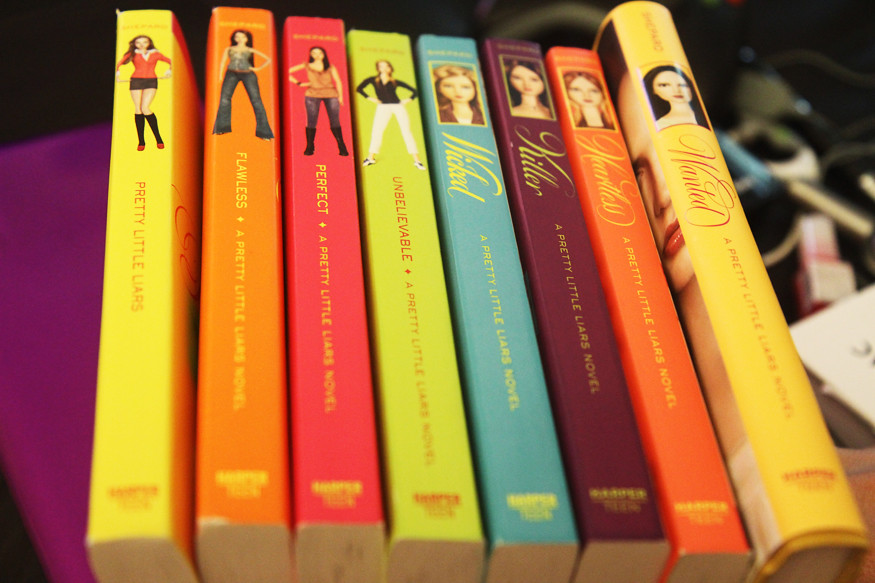
I feel sorry to four of them because they encounter terrors from A. Among the book series, I have read three of them, Pretty Little Liars, Flawless, and Perfect, and I like Perfect best. Maybe it's because the thrill of the book feels so real and the conflicts keep going and getting more complicated. I also found it pretty depressing. It's just too harsh for high schoolers. I don't know what to do if I were one of them.

However, if I compare to the TV series, the plot of the novel is quite slow-paced. The ending of the first book is also the ending of the Pilot episode. I spent 3 days to finish reading the book, but I could get the same storyline in the series for only 45 minutes. Some of the details were left behind, though.

After the first episode, the plots of both the book and the series go into different way. I was watching the series while I also reading the novel, so it got me confused to recall what was what because the gap is quite distinct. For example, I am used to the reunification the the ex-bestfriends in the series. However, in the novel, I also need to accept the "reality" that these four ex-bestfriends do not get along anymore. If I may say, they seem to keep a distance from each other. They also do not feel that they belong together. They're just strangers with memories.

If I may choose, I like the series better. Not because the novels are poorly written, but because I like to see those girls support each other in the series. They seem perfect and alive together. Nevertheless, I also like the novels because Shepard gives every details that the readers need, so I could imagine clearly what she is trying to say.

The review above is according to my opinion. I'm happy to have your own comments!

Saturday, 6 April 2013

Favorite Excerpt by Augustus Waters

The Fault in Our Stars by John Green
"I’m in love with you, and I’m not in the business of denying myself the simple pleasure of saying true things. I’m in love with you, and I know that love is just a shout into the void, and that oblivion is inevitable, and that we’re all doomed and that there will come a day when all our labor has been returned to dust, and I know the sun will swallow the only earth we’ll ever have, and I am in love with you."

Augustus Waters

Saturday, 30 March 2013

Date A Girl Who Reads

Source: We Heart It
"You should date a girl who reads.
Date a girl who reads. Date a girl who spends her money on books instead of clothes, who has problems with closet space because she has too many books. Date a girl who has a list of books she wants to read, who has had a library card since she was twelve.

Find a girl who reads. You’ll know that she does because she will always have an unread book in her bag. She’s the one lovingly looking over the shelves in the bookstore, the one who quietly cries out when she has found the book she wants. You see that weird chick sniffing the pages of an old book in a secondhand book shop? That’s the reader. They can never resist smelling the pages, especially when they are yellow and worn.

She’s the girl reading while waiting in that coffee shop down the street. If you take a peek at her mug, the non-dairy creamer is floating on top because she’s kind of engrossed already. Lost in a world of the author’s making. Sit down. She might give you a glare, as most girls who read do not like to be interrupted. Ask her if she likes the book.

Buy her another cup of coffee.

Let her know what you really think of Murakami. See if she got through the first chapter of Fellowship. Understand that if she says she understood James Joyce’s Ulysses she’s just saying that to sound intelligent. Ask her if she loves Alice or she would like to be Alice.

It’s easy to date a girl who reads. Give her books for her birthday, for Christmas, for anniversaries. Give her the gift of words, in poetry and in song. Give her Neruda, Pound, Sexton, Cummings. Let her know that you understand that words are love. Understand that she knows the difference between books and reality but by god, she’s going to try to make her life a little like her favorite book. It will never be your fault if she does.

She has to give it a shot somehow.

Lie to her. If she understands syntax, she will understand your need to lie. Behind words are other things: motivation, value, nuance, dialogue. It will not be the end of the world.

Fail her. Because a girl who reads knows that failure always leads up to the climax. Because girls who read understand that all things must come to end, but that you can always write a sequel. That you can begin again and again and still be the hero. That life is meant to have a villain or two.

Why be frightened of everything that you are not? Girls who read understand that people, like characters, develop. Except in the Twilight series.

If you find a girl who reads, keep her close. When you find her up at 2 AM clutching a book to her chest and weeping, make her a cup of tea and hold her. You may lose her for a couple of hours but she will always come back to you. She’ll talk as if the characters in the book are real, because for a while, they always are.

You will propose on a hot air balloon. Or during a rock concert. Or very casually next time she’s sick. Over Skype.

You will smile so hard you will wonder why your heart hasn’t burst and bled out all over your chest yet. You will write the story of your lives, have kids with strange names and even stranger tastes. She will introduce your children to the Cat in the Hat and Aslan, maybe in the same day. You will walk the winters of your old age together and she will recite Keats under her breath while you shake the snow off your boots.

Date a girl who reads because you deserve it. You deserve a girl who can give you the most colorful life imaginable. If you can only give her monotony, and stale hours and half-baked proposals, then you’re better off alone. If you want the world and the worlds beyond it, date a girl who reads.

Or better yet, date a girl who writes."


Taken from Goodreads, quote by Rosemarie Urquico

Saturday, 23 February 2013

The Land Of Stories: The Wishing Spell by Chris Colfer

Image Link
"What the world fails to realize is that a villain is just a victim whose story hasn’t been told."

If it is not offending, I will give my FOUR thumbs up for Chris Colfer to liven up my childhood memories of fairy tales at one book. He has successfully formulated every single well-known fairy tale into a charming and heart-warming story. And I definitely can't wait to read the next sequel of this book!

Alex and Conner Bailey are twins whose childhood were full of stories from a fairy-tale world. One of the stories that their father ever told them is The Walking Fish. Their Grandma, on the other hand, lives in a lively wooden cabin and has a thick and old book titled The Land of Stories. Alex is a passionate girl and always imagines how her life will be if she lives in a fairy-tale world. She isn't quite good in making friends, so reading stories can lessen her lonely feeling. While Conner, is a rather-lazy boy who cannot stand to stay still every time he attends Mrs. Peter's class.

One day, their Grandma inherits them The Land of Stories book. Even though Alex doesn't really so sure to accept the book--because she knows this book is very important to her--she finally accepts it. In the middle of the night, Alex opens the book and wishes to visit the fairy-tale world and meet the characters she always longing for to be her friends.

Surprisingly, the book trembles and radiates a shimmering light. Alex tests the book by dropping some of her school stuff, such as pencils, pens, and her bag. But, Alex doesn't know where her belongings go and how they will turn back. Alex couldn't say anything at first, and she even cannot sleep, thinking about what is going on with the book.

Alex finally tells Conner about this peculiarity. At first, Conner doesn't believe her, until he sees the shimmering light with his own eyes.

After going home for school, Alex tries to put her hand into the book. It makes her curiosity grows more and more higher. She then drops her feet and her body until waist-deep. She doesn't mean to make herself drown into The Land of Stories book, when Conner suddenly opens her bedroom's door and surprises her to not to going down into the book. Alex loses her grip, then fall into The Land of Stories.

Conner, on the other hand, cannot stay still seeing his sister disappears into an unknown world. He then catches up with her and falls int the middle of forest with thick and tall trees. He even barely can see the sunlight. The atmosphere is very dim and mysterious. He cannot deny that he's scared, and he doesn't know what world he's living in now. With Alex, Conner tries to adapt with the whole new world he faces, and searches for the way to get back home.

The are told by a human-like, gigantic frog called Froggy that there is a well called The Wishing Spell which can grant whatever wish they ask for. Maybe the well can grant their request to go home. Then they are given a journal which lead them to collect items they need to be dropped into the well. But, The Wishing Spell only can grant two wishes. The first wish had been granted a long time ago, so The Wishing Spell only can work one more time.

At first, Alex's and Conner's journey seems very easy, but it is more and more harder when they know that the Evil Queen--yes, Snow White's stepmother--also after The Wishing Spell and is collecting the same items as them. Moreover, there are so many adventures and shocking moments that they should face every time they meet each of the character they once ever read in the book.

Red Riding Hood, for example, now owns her own kingdom. Cinderella is about to become a mother. Goldilocks is a wanted fugitive, dead or alive. Jack falls deeply in love with someone that is far away from him. Sleeping Beauty is anxious because she doesn't know how to wake the people in her kingdom up and how to get rid the sleeping curse. Snow White's kingdom is in a chaos because the Evil Queen escapes from the dungeon... And so many other stories that we ever know, in The Land of Stories, finally everything has changed and gives you the best surprising ending.

Don't forget to follow the twins' journey. Hope they will find their way home!

Friday, 25 January 2013

Drums, Girls, and Dangerous Pie by Jordan Sonneblick

"Instead of agonizing about the things you can’t change, why don’t you try working on the things you CAN change?"

I found this book review on Goodreads (as usual, consult to this particular website before I start reading a book). Actually, I was searching for The Fault in Our Stars review, but then I was shifted to this unique title of young adult book.

What made me really curious was, the readers said that this book was filled with sarcasm by the main character, Steven. He was an eighth grader and had a super annoying five-year-old little brother, Jeffrey. As what little siblings did, Jeffrey was the big fan of Steven and always depended on him on many occasions. Steven found this rather annoying, especially when Jeffrey unintentionally humiliated him in front of his girl friend, Annette, and his crush, Renee.

However, when Jeffrey’s illness was discovered, Steven’s life suddenly turned upside down. He was detected to have a leukemia. His mom was suddenly forced to resign from her job to take care of Jeffrey. His father worked harder to cover up Jeffrey’s treatment. Steven had a difficulty to deal with his school and his drum lessons as his mind only directed to Jeffrey’s condition. His family’s life was no longer the same as before.

It seemed pretty cliche, a story that told a family whose member suffered from some sort of illness. However, the author, Jordan Sonnenblick, had succesffully formulated this Drums, Girls, and Dangerous Pie into a heart-warming story. As it was told from a young adult’s point of view, we would be invited to feel the deepest feeling of Steven’s. Also, because he was only thirtheen, we also could see how Steven dealt with his girl friends and his environment by using such sarcastic words, but in a hilarious way.

As the Goodreads review said, “a brave and beautiful story that will make readers laugh and break their hearts at the same time.” Because by reading this book, we learned that, no matter how annoying your siblings were, no matter how annoyed you were by them, deep down in your heart, you know that you really did care of them.

Saturday, 19 January 2013

Found this excerpt on my piece of crap writing, then I thought it's pretty cool


As long as the future is still blurry, there’s nothing to worry about. Karena ‘misteri’ itulah yang seharusnya membuat hidup ini santai. Karena kita nggak akan pernah tahu what’s up ahead, why worry?

Monday, 14 January 2013

TV Series: Between Cable TV and the Internet


The emergence of cable TV in Indonesia began in 1997 when Indovision’s satellite, IndoStar 1, launched. Since then, many companies followed Indovision’s success to launch other cable TV service, such as FirstMedia, TelkomVision, Top TV, Yes TV, and so on. In fact, all these companies provide almost the same channels in different categories, like HBO and Fox Movies Premium (movies), ESPN (sports), StarWorld, MTV Asia, and TLC (entertainment), Disney Channel (kids’ programs), and NatGeo (education).

The evolving of cable TV in Indonesia creates some dynamics. Indonesians previously mostly were exposed to local channels which only showed local shows. Some of them might have imported several abroad shows, but not as much as cable TV did. All of the programs on cable TV are imported from various countries, such as USA, UK, South Korea, Japan, and Australia. Through cable TV, Indonesians are gradually more aware to global issues, education, and also entertainment.

However, if we take a look to a statistic, the total household which has television in Indonesia was 40 million in 2005. The total number of potential customers for cable TV was only 30% from them.  Indeed, the number is gradually increasing as the time goes by. If we take a look to the statistic regarding this cable TV customers, we can infer that the global influences to Indonesian viewers are not as much as the local influences. It can be partially true. However, we also have to consider the strength of other media, such as internet which brings seem-more complicated global influences than the cable TV does. Related to the entertainment, StarWorld seems to be the most popular channel, especially among young audience, as it shows various latest TV series, such as dramas and sitcoms. TV series, despite its entertainment purpose, bring dynamics in terms of social class and copyright issues among young audience in Indonesia.

As not every household has cable TV, internet becomes the prime source of accessing abroad TV series. Those who do not have cable TV in their home can still consume and watch them through the internet. It shows that even people who do not have cable TV still can follow the trends through the internet. One of the examples is the easinees of watching or downloading How I Met Your Mother series. This series is aired on StarWorld. However, because it is also provided on the internet, people who do not have access to cable TV still can enjoy it. Moreover, today, internet is not a source that is hard and expensive to use. Even people who do not have its access at home still can use it from the warnet, for example.

 Another example is today’s most popular Korean show titled Running Man. It even is not aired in any TV channels both in local or cable TV in Indonesia. However, its popularity is spread massively among young Indonesians. They watch it by online from the internet, downloading it, or even getting the soft copy from friend’s harddisk. In the end, it bounds people from any social classes. The abroad TV series are not only enjoyed by upper-middle class people anymore, but also from other social classes, too.

Besides its easiness, consuming TV series from the internet is basically free. Unlike cable TV, people do not have to pay some amount of money to watch and download from the internet. It seems simple and easy, but it actually leads to one major problem; copyright. Since most of the sources are not legal, the free-accessed series that are provided on the internet mostly violate copyright issue.

Since the potential number of cable TV customers in Indonesia is around 30% from the total TV population, we can simply infer that only 30% from them can afford to pay it. In consequence, in order to be up-to-date, they search through another source that is much affordable; internet. Nevertheless, we also cannot directly conclude without considering other aspects, too. Those who do not have cable TV in their home perhaps simply do not want to be exposed to ‘Westernization’ or they have been satisfied enough with local programs. However, in this essay, I intentionally do not highlight these aspects. I simply want to highlight the dynamics between those who can and cannot afford the cable TV.

Regarding to the copyright issue, its regulation in Indonesia is not as strict as other countries, such as the USA. Since early 2012, the USA govenment has blocked several file-hosting websites, such as Megaupload (megaupload.com) and deleted all the files that violate copyright. In Indonesia, people still can access them, even though some of them also have been deleted or blocked. However, the opportunity is still huge to access them since they are open and free for anyone.

This copyright issue always becomes multi-layered issue and problem. Since it is related to the economic status and government regulation, it is hard to break the vicious cycle. If they have to watch the legal ones, the cable TV is not affordable for some people. Buying the original DVDs also needs some huge amount of money. In the end, internet is the only shortcut. They still can enjoy and access the same series without have to spend much money.

As the series are released every week, young people are demanded to be up-to-date. However, the cable TV usually airs the shows few weeks or a month later after its original airing in its original country. Again, the internet provides the series faster than the cable TV. Even Indowebster (indowebster.web.id) provides the copy of the shows a day after its original airing. In consequence, the young people, even those who have cable TV at their home, prefer to download from the internet rather than waiting them to be aired on the TV. Internet seems to be better place for consuming TV series as it is free, faster, and easier rather than the cable TV. It reveals a new fact that not only those who come from lower-middle social class who do this, but also those who actually able to pay monthly payment for cable TV.

In the end, the internet always be the ‘alternative’ source to find such things like TV series in an easier and free way. In fact, it does not only happen to those who cannot afford cable TV, but also for those who can. Despite its violation to copyright issue, we cannot simply forget that the internet also bounds people from any social classes to consume the previously-expensive-and-exclusive TV series into an entertainment that can be enjoyed by everyone.

Reference
“Perkembangan Industri TV Berbayar di Tengah Persaingan Ketat.” Datacon.co.id 23 Dec 2012. <http://www.datacon.co. id/Internet2008Ind%20TVcable.html>


Written as Critical Study of Popular Culture final assignment.

Sunday, 16 December 2012

Senja di Philip Island

Cerita ini juga dimuat di Reader's Digest Indonesia Website dan menjadi artikel pilihan editor periode keempat.


Pantai.

Mendengar satu kata itu terbayang debur ombak yang memecah di tengah lautan. Pasir-pasir halus yang tersapu air laut. Atau burung-burung yang beterbangan menuju sarangnya. Aku selalu mencintai pantai dan keindahannya. Dan awal tahun ini aku mendapat kesempatan untuk mengunjungi salah satu pulau terbaik yang pernah aku kunjungi, yaitu Phillip Island, terletak di sebelah tenggara kota Melbourne, Australia.

Pukul lima sore aku berangkat. Dengan jarak tempuh sekitar 140 kilometer, butuh waktu sekitar dua jam untuk menuju ke sana menggunakan mobil. Aku pergi ke sana dengan seorang saudaraku yang sudah lama tinggal Melbourne. Dari kejauhan, aku sudah bisa melihat laut terhampar, beradu dengan sinar matahari sore yang memantulkan sinar di permukaannya.

Untuk memasuki area Phillip Island, mobil kami harus menyebrangi jembatan sepanjang sekitar 1 kilometer yang menghubungkan area Phillip Island yang terpisah dari daratan Australia. Pulau yang cukup luas ini memiliki berbagai macam tempat wisata dan kegiatan yang berhubungan dengan alam, mulai dari pantai, area surfing, kemping, bersepeda, hingga melihat-lihat kekayaan alam Australia. Di Phillip Island juga, kita bisa menemukan Penguin yang pulang ke sarangnya pada saat senja tenggelam. Undeniably cute!

Walau Phillip Island memiliki banyak pantai, seperti Shelley Beach, Summerland Point, dan Woolamai, waktu itu aku hanya mengunjungi dua tempat selama berada di sana, yaitu The Nobbies dan Penguin Parade karena tujuan utamaku memanglah untuk melihat Penguin. The Nobbies terletak di sebelah ujung barat pulau Phillip, merupakan sebuah tanjung yang langsung menghadap laut. The Nobbies memiliki kontur yang berbukit-bukit dan memiliki boardwalks yang membawa wisatawan berjalan-jalan di sekitar. Karena di antara bukit-bukit tersebut, terdapat banyak sarang Penguin dan burung pantai! Langsung deh, aku menjepret kamera begitu sang Penguin kecil muncul dari sarangnya. Dan di bawah bukit tersebut, terhampar langsung laut yang ombaknya memecah di antara batu karang. Begitu romantis, apalagi di kala sunset dan ditemani sang pacar (yang sayangnya tidak pada saat itu).

Sekitar pukul delapan malam (which is, yang masih sangat terang benderang karena pada musim panas matahari tenggelam pada pukul 9 malam), aku dan saudaraku beranjak menuju Penguin Parade. Di Penguin Parade, kami membeli tiket “khusus” untuk menonton para Penguin yang baru pulang dari laut setelah berburu ikan. Biasanya mereka muncul pada saat sunset dan datang berombongan memasuki sarangnya. Sayang, kami tidak diizinkan untuk menangkap gambar apa-apa selama di sana, tidak juga dengan kamera HP.

Kami berdua duduk di sebuah tribun yang langsung menghadap ke pantai, persis seperti orang yang mau menonton konser. Di samping kanan-kiri kami banyak turis yang berdatangan dari berbagai penjuru dunia. Sekeluarga tulis Latin duduk di depan kami, sementara di samping kami sepasang suami-istri berwajah Asia Timur duduk dengan mesranya.

Aku menatap jauh garis cakrawala di depan. Angin yang berembus semakin lama semakin kencang hingga aku harus merapatkan jaket. Bahkan aku men-double-nya dan angin masih saja ganas menusuk tulang-tulangku. Pada saat itulah aku merasa seperti sedang benar-benar sendiri.

Aku menatap garis cakrawala itu, menyadari bahwa tempatku berasal ribuan mil jauhnya berada di baliknya. Aku membayangkan hangatnya suasana rumahku saat itu, di mana aku biasanya bertemu orang-orang yang aku cintai. Sekarang, aku berada di sini. Kedinginan dan sendiri. Di sebuah tempat asing yang tak kukenal sama sekali. Indah... Namun terasa menyakitkan. Aku merasa seperti ada yang hilang. Aku seperti kehilangan kebahagiaanku. Ketika melihat orang-orang di sekitarku bersama orang-orang terkasihnya, aku justru berada sangat jauh dari mereka semua. Aku harap aku bisa menemukannya. Menemukan mereka dalam sekejap mata.

Dan di saat matahari tergelincir di ufuk barat, di saat rombongan Penguin berpulang ke sarangnya, aku menyadari sesuatu yang membuat mataku terasa panas. Aku ingin pulang. Ke tempat di mana orang-orang yang kucintai berada.

Senja di Phillip Island ini membuatku belajar bahwa, tak peduli seindah apa pun tempat yang kukunjungi, tempat terindah adalah tempat di mana aku hidup bersama orang-orang yang kucinta. Seperti Penguin yang sepanjang hari berburu ikan di laut, pada akhirnya mereka akan kembali ke sarangnya masing-masing bersama sesamanya yang mereka kasihi.

Saturday, 25 August 2012

Seribu

Setengah berlari, aku melepaskan tas lusuh yang kusampirkan dan membantingnya begitu saja ke atas kursi. Tas tersebut adalah milik ayah yang beliau turunkan kepadaku. “Masih bisa dipakai,” katanya, meski telah bolong di sana-sini dan terpaksa ditambal berkali-kali.

Rumah masih terasa lengang. Ayah masih betah di sawah, sementara adikku si Aski badung itu pasti sedang mementas layangan di lapangan. Meskipun begitu, tetap saja rumah ini terasa sesak. Rumah yang sangat pantas untuk disebut gubuk ini hanya memiliki 3 ruangan utama: kamar keluarga, ruang tamu, merangkap dapur dan ruang makan, kamar Bapak dan Ibu, dan kamarku dan Aski. Tak ada jendela-jendela besar seperti milik orang gedongan, yang ada hanyalah lubang ventilasi lembab untuk sekedar mengintip dunia luar.

“Pelan-pelan loh, Nduk,” Ibu yang sedang menjahit di meja kerjanya mengomentariku. Tangan dan kakinya anteng menggerak-gerakkan mesin jahit tuanya yang usang. Aku tidak mengindahkan ceramah beliau kali ini. Aku bergegas menuju kamar dan mempersiapkan diri.

Setelah lulus sekolah hampir setahun yang lalu, tetes demi tetes keringat kucurahkan agar mimpiku tidak hanya berhenti sampai di sini. Tidak hanya berhenti sebagai kuli panggul yang pekerjaannya tiap hari menggotong karung beras. Tidak hanya sekedar memiliki ijazah SMA yang tertumpuk debu di lemari. Biar miskin begini, jangan salah, aku adalah salah satu lulusan terbaik sekolahku tahun lalu. Hanya saja nasib memang membenturku karena lembaran sakti yang harus dengan susah payah kukumpulkan demi bisa meneruskan sekolah: uang.

Satu tahun sudah cukup kuhabiskan membanting tulang, merendahkan kepalaku di hadapan orang-orang, dan menjadi kacung yang bisa dioper ke sana ke mari. Hari ini sudah kucukupkan semua itu. Aku tak mau lagi menjadi orang rendahan. Aku tak pernah merasa terhina hanya karena aku miskin. Tetapi aku terhina jika aku bodoh.

Hidup di desa terpencil yang jauh dari peradaban bukan halangan untuk membuka duniaku menjadi lebih lebar. Di saat banyak teman-temanku yang putus sekolah dan berakhir menjadi kacung seperti orang tuanya, aku bersikukuh untuk menamatkan SMA-ku meski aku harus menambah beban kedua orang tuaku. Di saat banyak orang yang masih terbelenggu dari dunia selain desa Tegalgundul yang bahkan di peta pun tak nampak, aku berusaha mencari akses agar aku bisa mengintip dunia luar yang dikatakan banyak orang itu mahaluas.

Internet. Aku mengenal istilah internet beberapa bulan lalu dari Pak Kepala Desa saat aku berkunjung ke kantornya. Kebetulan Pak Ahmad—namanya—adalah kenalan Bapak semenjak beliau masih kecil. Mereka berdua dulu adalah teman sepermainan dan sering mementas layangan bersama. Keadaan ekonomi keluarganya yang cukup berada mengantarkannya menjadi kepala desa, sementara ayahku tetap menjadi seorang petani miskin yang hanya bisa menghidupi keluarga kecilnya.

Satu bulan yang lalu, saat aku sedang bosan dan bermain ke kantornya Pak Ahmad, beliau meminjamkanku komputernya dan membiarkanku memenuhi hasratku akan rasa ingin tahu tentang dunia luar. Kantor Pak Ahmad adalah satu-satunya bangunan yang bisa dikatakan “beradab” di desa ini. Tembok semennya bersinar dicat berwarna putih, lantainya mengilap yang selalu dipel setiap hari, dan perabotnya tertata rapi di dalam ruangan. Jauh berbeda dengan rumah bambu kami yang usang.

Kota besar... Jalan raya... Sekolah... Universitas... Anganku melayang-layang, membayangkan dunia utopis di luar sana. Dunia fana yang kadang membuat terlena, namun sudah kurindukan untuk berjumpa. Hingga kutemukan sebuah informasi tentang pendaftaran mahasiswa baru di salah satu universitas negeri ternama.
Inilah kesempatanku. Seolah ada secercah sinar harapan yang menyergap, bergegas aku kembali ke rumah mengendarai sepeda ontel Bapak, warisan dari Mbah dan Mbah Buyut dari zaman perang, kata beliau. Mau benar atau tidak, pokoknya sepeda ini dengan secepat kilat mengantarkanku kembali ke rumah. Secepat kilat mengantarkan informasi itu ke telinga Bapak.

Sesuai dugaanku wajah Bapak merengut dan alisnya naik satu. “Sekolah? Kan kamu sudah tamat sekolah,” jawab Bapak tak acuh sambil menyeruput kopinya.

“Maksudku, aku pengen kuliah, Pak,” balasku, tak merasa terintimidasi oleh nada keraguannya.

“Kuliah?” suara Bapak mulai meninggi. “Kuliah opo thok, Fri. Kamu kira di kampung ini punya tempat kuliah seperti yang kamu bilangin itu?”

“Makanya aku pengen ke Jakarta, Pak,” jawabku lirih, bukan karena takut emosi Bapak akan meledak, tetapi karena tidak ingin Ibu mendengar suara Bapak yang marah-marah.

“Jakarta?” Bapak bertanya lagi, seolah semakin tidak mengerti dengan omonganku yang ngawur. Beliau meletakkan cangkir kopinya di atas meja dan menatapku lekat-lekat. “Wis, jangan ngimpi loh, Fri. Mendingan kamu kerja sana, cari duit, biar bisa makan . . .” Bapa bangkit bersiap meninggalkanku sebelum aku sempat membalas.

“Pak!” aku memanggilnya sebelum Bapak masuk ke kamar. Bapak berbalik dan kutatap mata bingungnya. “Afri serius pengen kuliah, Pak.”

Bapak kembali mendekat dan berdiri di hadapanku. Mata sayunya itu telah menunjukkan perjalanannya selama ini, kepedihannya, ketegasan di balik sikapnya, bahkan kelembutan yang tersirat dari sorot matanya bisa kulihat secara bersamaan.

“Fri, orang kecil seperti kita ini gak perlu mimpi muluk-muluk . . .” suara Bapak berubah merendah, dengan nada halus yang jarang sekali kudengar. “Kalau kamu mau jadi kepala desa seperti Pak Ahmad, atau jurangan beras seperti Engko Liam, Bapak dukung. Jangan, jangan mimpi kejauhan, Nduk, Bapak takut kamu jatuh,” Bapak menggelengkan kepalanya sambil menepuk pundakku pelan.

Lampu minyak yang remang-remang menerangi wajah Bapak menyadarkanku bahwa Bapak hanya mau membawaku dalam kenyataan yang ada. Potret kehidupan kami yang selama turun-temurun diwariskan. Potret sebuah keluarga petani miskin yang hanya bisa menghabiskan harinya dengan bermimpi. Bermimpi punya lahan yang luas. Bermimpi punya hasil panen yang banyak. Bermimpi bisa memiliki uang berlimpah. Bahkan sampai mimpi-mimpi sesederhana itupun tak jua dapat terlaksana. “Kita ini emang udah ditakdirkan melarat. Mbahmu, Mbah Buyutmu, Mbah Mbah Buyutmu, semuanya melarat, Nduk!”

Aku takkan melupakan kata-kata Bapak tempo dulu saat aku berkeinginan untuk melanjutkan sekolah ke SMA. Kegigihanku akhirnya meluruhnya sifat keras Bapak. Namun, empat tahun kemudian, kata-kata yang sama meluncur lagi dari bibir Bapak, memupuskan harapanku untuk yang kedua kalinya. Takdir yang membuat kami semua melarat. Takdir yang akan membuat anak-anakku, cucuku kelak akan ikut merasakannya.

Tidak, aku tak mau seperti itu.

“Pak,” aku mengangkat kepalaku, seolah menantang Bapak bahwa ucapannya itu tidak benar. “Afri akan sekolah dengan biaya Afri sendiri, Pak.”

Sekejap mata Bapak nampak bingung, melecehkan, namun juga ada sorot bangga dalam tatap matanya itu. Perlahan tangannya itu turun dari bahuku, membenarkan kembali letak pecinya sebelum dia berbalik membelakangiku. Ucapanku itu membuat jalan Bapak sempoyongan, seolah ada beban berat yang mendudukinya.

Sebelum beliau menyibakkan tirai kamarnya, Bapak menatapku dengan tatapan nanar, “Kamu mau bercita-cita itu bagus, Nduk. Kamu bermimpi ke tempat yang jauh juga tak mengapa. Silakan kamu kuliah, tapi Bapak tak mampu memberi kamu sepeser pun. Silakan kamu pergi ke mana pun, tapi Bapak tidak bisa jamin kalau kamu tidak kecewa."

Kemudian beliau menghilang di balik tirai kamarnya, sebagai pengganti pintu yang telah lapuk bertahun lalu.
Aku berdiri tergugu, mencerna ucapan Bapak tadi. Omongan beliau sangat menohok dadaku, tetapi aku justru tersenyum mendengarnya.

Aku telah meluluhkan hati Bapak untuk kedua kalinya.

Aku tak akan kecewa, Pak, gumamku.

”Fri, mau ke mana thok kamu?” Ibu heran menatapiku yang lalu lalang tak karuan sepulang bekerja. Kusambar celengan ayam milikku dan palu milik Bapak tanpa izinnya. Sejurus kemudian, aku sudah mengenakan tas lusuh itu lagi, lengkap dengan topi caping untuk menahan panasnya matahari.

“Ke kantor Pak Ahmad, Bu!” aku bergegas pergi dan menyambar sepeda ontel yang kuparkirkan dekat sawah. Kukayuh pedalnya kuat-kuat, sambil memeluk celengan ayam di antara kedua lengan.
Aku harus cepat sampai ke kantor Pak Ahmad siang ini. Hari ini adalah pendaftaran terakhir masuk universitas. Setelah itu, aku akan memecah celengan ayam ini dan menyetorkannya ke bank sebagai uang pendaftaran.

Sesampainya di kantor kepala desa, aku mengetuk pintu ruang kerja Pak Ahmad, namun tidak ada jawaban. Kuketuk berkali-kali, tetap hasilnya nihil.

“Pak Ahmad lagi ada urusan di luar, Fri,” ujar Pak Kosim, salah satu stafnya, kebetulan melihatku. Seketika lututku lemas. Bersepeda panas-panasan di siang bolong tak bisa mengalahkan kekecewaan yang melanda diriku saat mendengar berita itu. Apakah ini pertanda? Apakah memang seharusnya semua ini tak ada?

“Tapi tadi beliau pesan, kalau ada kamu, langsung masuk aja ke dalem,” lanjutnya yang seketika membuat harapanku muncul lagi. Bayangan kekecewaan segera kutepis. Ternyata Tuhan mengizinkan!

Kepercayaan yang Pak Ahmad berikan kepadaku membuat rasa semangatku semakin memuncak. Sebentar lagi aku akan melanjutkan sekolah! Jakarta, kau akan kedatangan penghuni baru! Sambil menunggu komputer menyala, aku duduk membayangkan betapa nikmatnya dapat mengenyam bangku sekolah lagi setelah setahun ini hal itu terlupakan. Bukan itu saja, bayangan kota besar langsung menari-nari dalam benakku. Kota besar dan orang besar. Aku yakin, orang-orang besar yang tinggal di sana pasti pernah memperoleh pendidikan yang sama dengan yang aku perjuangkan sekarang. Dan untuk menjadi seperti mereka dibutuhkan usaha yang keras. Aku mengingatkan pada diri sendiri, bahwa semua ini hanyalah sebuah awal . . .

Tanpa bisa menunggu, jari-jariku sudah gatal memainkan kursor di komputer Pak Ahmad, mencari-cari nama jurusan yang sudah aku dambakan semenjak dahulu.

Teknologi Pangan.

Teknik Industri Pertanian.

Bapak. Nama itu berputar-putar dalam otakku ketika akhirnya aku mengeklik kedua jurusan dambaan itu. Sesungguhnya nama Bapak-lah satu-satunya motivasiku selama ini mengapa aku sampai membating tulang demi bersekolah. Alat-alat pertanian Bapak yang berpuluh tahun ini Bapak gunakan tak mampu mengolah sawah kami secanggih mesin-mesin modern. Hanya bermodalkan keringat, tenaga, dan keyakinan diri, sampai berpuluh tahun lamanya Bapak bertahan menjadi seorang petani. Seorang petani yang hanya mampu menghidupi anak istrinya selama puluhan tahun ini. Kata Bapak, kami ini adalah korban sistem feodal. Sistem yang membunuh rakyatnya perlahan-lahan dengan keterpurukan. Memiliki tanah, hanya sedikit. Memiliki rumah, kecil. Memiliki uang, hanya cukup untuk mengenyangkan perut anak istri.


Terima kasih. Nomor ujian Anda adalah 2781781B. Silakan melakukan pembayaran pendaftaran sebesar Rp500.000,00 melalui bank ABC dengan nomor rekening 9234019x.


Napasku tertahan. Berhasil. Segera kuraih celengan ayamku dan kupalu dengan kuat sehingga isinya berhamburan. Uang receh yang bertumpuk menyebar ke penjuru arah, membuat kantor Pak Ahmad seketika berantakan.

Kuhitung selembar demi selembar uang yang susah payah kutabung selama setahun ini, berharap lembaran ini akan menjadi pembuka jalan untukku ke depan. Untuk keluar dari sistem yang mematikan kami puluhan tahun lamanya. Aku akan menjadi awal. Aku akan menjadi pembuka jalan agar anak-anakku nanti tak perlu merasakan kepedihan yang sama seperti yang kurasakan.

Koin terakhir berhasil kukumpulkan.

Jumlahnya Rp499.000,00.

Hatiku tertohok. Dadaku sakit. Seribu. Apakah ada koin yang terlewat? Lembaran yang terlewat? Tidak, tidak ada. Aku sudah memastikan bahwa ruangan Pak Ahmad ini sudah bersih dari ceceran uang receh.
Tumpukan uang itu bergetar dalam genggamanku. Harus kucari ke mana uang seribu itu? Meminjam pada Pak Kosim? Atau Pak Ahmad? Atau . . . Bapak sekalian? Aku langsung teringat dan kembali tertampar oleh ucapan Bapak malam itu,

“Silakan kamu kuliah, tapi Bapak tak mampu memberi kamu sepeser pun.”

Mungkin . . . mungkin itu memang benar. Mungkin semua ini memang pertanda. Pesan Bapak dulu. Perginya Pak Ahmad. Uang yang tak mencukupkan. Semuanya memang pertanda bahwa perjuanganku memang harus terhenti sampai di sini.

Mungkin aku harus mencobanya lagi tahun depan, tahun depannya lagi, atau depannya lagi. Kalau tidak, mungkin aku harus menunggu satu generasi lagi untuk keluar dari sistem terkutuk ini. Kalau gagal, coba generasi berikutnya lagi. Tak mengapa, setidaknya aku telah bertahan sampai di titik ini.

Sayang, aku mau kuliah, tapi uangku kurang seribu.